 Lịch Âm Việt
Auspicious Hours (Giờ Hoàng Đạo): What They Are, How to Find Them
· 4 min read
Giờ hoàng đạo (literally “yellow path hours”) are the six two-hour periods of a day that Vietnamese tradition treats as favourable. Families use them to choose a time to set out on a journey, open a shop, hold a wedding ceremony or break ground. The other six periods are giờ hắc đạo (“black path hours”). Which hours are auspicious depends on the earthly branch of the day, so it changes daily.
The 12 traditional hours
The traditional day is divided into 12 periods of two hours, each named after one of the 12 earthly branches (the zodiac animals):
| Hour | Clock time | Hour | Clock time |
|---|---|---|---|
| Tý (Rat) | 23:00 – 01:00 | Ngọ (Horse) | 11:00 – 13:00 |
| Sửu (Buffalo) | 01:00 – 03:00 | Mùi (Goat) | 13:00 – 15:00 |
| Dần (Tiger) | 03:00 – 05:00 | Thân (Monkey) | 15:00 – 17:00 |
| Mão / Mẹo (Cat) | 05:00 – 07:00 | Dậu (Rooster) | 17:00 – 19:00 |
| Thìn (Dragon) | 07:00 – 09:00 | Tuất (Dog) | 19:00 – 21:00 |
| Tỵ (Snake) | 09:00 – 11:00 | Hợi (Pig) | 21:00 – 23:00 |
The hour of Tý starts at 23:00 the evening before, so in the traditional reckoning a new day begins at 23:00 rather than midnight. In everyday speech the Mão hour is usually called Mẹo.
Where hoàng đạo and hắc đạo come from
In traditional day selection, the 12 hours are assigned in turn to 12 spirits. Six are considered favourable: Thanh Long (Azure Dragon), Minh Đường, Kim Quỹ, Bảo Quang (also called Kim Đường), Ngọc Đường and Tư Mệnh. An hour that falls under one of these is hoàng đạo. The other six (Thiên Hình, Chu Tước, Bạch Hổ, Thiên Lao, Huyền Vũ, Câu Trận) give the hắc đạo hours.
Where the cycle of spirits starts depends on the day’s earthly branch. The result: days whose branches are “opposite” (six apart) share the same set of auspicious hours.
Lookup table by the day’s branch
Once you know the day’s branch (its Chi: Tý, Sửu, Dần…), read the row:
| Day’s branch | Auspicious hours |
|---|---|
| Tý, Ngọ | Tý, Sửu, Mão, Ngọ, Thân, Dậu |
| Sửu, Mùi | Dần, Mão, Tỵ, Thân, Tuất, Hợi |
| Dần, Thân | Tý, Sửu, Thìn, Tỵ, Mùi, Tuất |
| Mão, Dậu | Tý, Dần, Mão, Ngọ, Mùi, Dậu |
| Thìn, Tuất | Dần, Thìn, Tỵ, Thân, Dậu, Hợi |
| Tỵ, Hợi | Sửu, Thìn, Ngọ, Mùi, Tuất, Hợi |
This table was checked day by day against the calendar library used on lichamviet.com.
Worked examples
| Solar date | Lunar date | Day’s Can Chi | Auspicious hours |
|---|---|---|---|
| 17 Oct 2026 | 8th of month 9 | Giáp Tý | Tý, Sửu, Mão, Ngọ, Thân, Dậu |
| 18 Oct 2026 | 9th of month 9 | Ất Sửu | Dần, Mão, Tỵ, Thân, Tuất, Hợi |
| 19 Oct 2026 | 10th of month 9 | Bính Dần | Tý, Sửu, Thìn, Tỵ, Mùi, Tuất |
| 6 Feb 2027 (Tết) | 1st of month 1 | Bính Thìn | Dần, Thìn, Tỵ, Thân, Dậu, Hợi |
(The date links go to day pages in Vietnamese.)
17 October 2026 is a Giáp Tý day, so its auspicious hours are Tý (23:00–01:00), Sửu (01:00–03:00), Mão (05:00–07:00), Ngọ (11:00–13:00), Thân (15:00–17:00) and Dậu (17:00–19:00). Six days later, 23 October 2026 is a Canh Ngọ day and has exactly the same set.
Work it out yourself
- Find the day’s earthly branch. The quickest way is to look it up: the app, the today’s lunar date page (in Vietnamese) or a day page such as 17 October 2026 (in Vietnamese).
- Find that branch in the lookup table.
- Convert the hour names to clock times with the 12-hour table.
Why days have names like Giáp Tý or Ất Sửu is explained in Can Chi and the Vietnamese zodiac.
Living outside Vietnam
The clock ranges are fixed (Tý is always 23:00–01:00 and so on), and the website’s pages give them in Vietnam time (UTC+7). Neither the app nor the website converts them to another time zone. If you live abroad and want to use auspicious hours for a ceremony, agree with your family whether to follow Vietnam’s clock or your local one.
See auspicious hours in Lịch Âm Việt
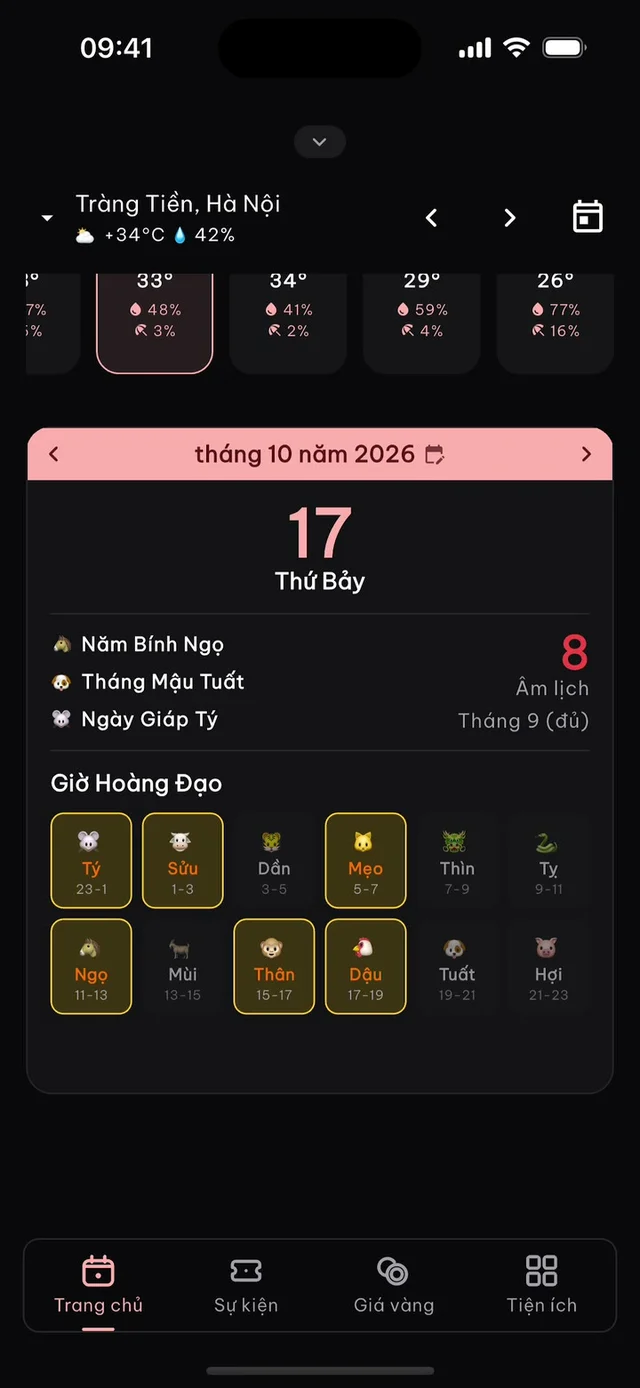
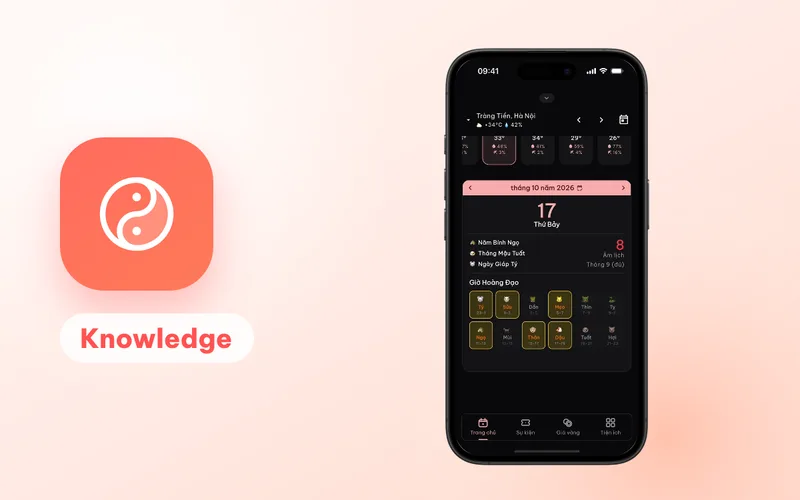
- Phone and tablet: on the Trang chủ (Home) tab, swipe up below the calendar to open the day card. The Giờ Hoàng Đạo section lists all 12 hours with their clock ranges and highlights the six auspicious ones. Tap another date to see that day.
- Mac and Windows: click the lunar date in the menu bar (Mac) or the tray icon (Windows) to open the quick panel, which marks the auspicious hours.
- Android widgets: the medium and large Lịch vạn niên (almanac) widgets show the auspicious hours on the home screen. See the Android guide.
The app shows the auspicious hours and Can Chi, but not other almanac details such as whether the whole day is “good” or “bad”. Those are on the website’s day pages (in Vietnamese), and the Android Lịch vạn niên widgets show whether the day is hoàng đạo or hắc đạo.
Keep it in perspective
Auspicious hours are a custom, not science. Many families use them for peace of mind when choosing a departure time or a time for a ceremony, and that’s the spirit in which calendars show them.
FAQ
How many auspicious hours are there in a day?
Six. The day is split into 12 periods of two hours each; six are hoàng đạo (auspicious) and six are hắc đạo (inauspicious).
When does the hour of Tý start?
At 23:00 the previous evening, running to 01:00. Then come Sửu 01:00 to 03:00, Dần 03:00 to 05:00, Mão 05:00 to 07:00, and so on, two hours each.
Where can I see today's auspicious hours?
In the Lịch Âm Việt app, on the day card of the Home tab, where the six hours are highlighted. Also on the today's lunar date page on lichamviet.com (in Vietnamese).
Why do some days share the same auspicious hours?
The hours depend on the day's earthly branch, and branches six apart (such as Tý and Ngọ) use the same set. So the pattern repeats every six days.
 lichamviet.com